Main Menu
- Home
- Products
- Applications
- Product Support
- Service
- Learn
- Product News
- About Us
- Contact Us


Do you have confidence you can
defend against compliance complaints?
Continuous, remote monitoring that helps you identify noise issues, investigate events, and respond before complaints escalate.
 Define Your Requirements
 Monitor Remotely
Help protect access to your monitoring system with login-protected user accounts and encrypted data transmission with LAN or wireless connectivity
Benefit from Class 1 measurement accuracy to support defensible noise assessments and compliance
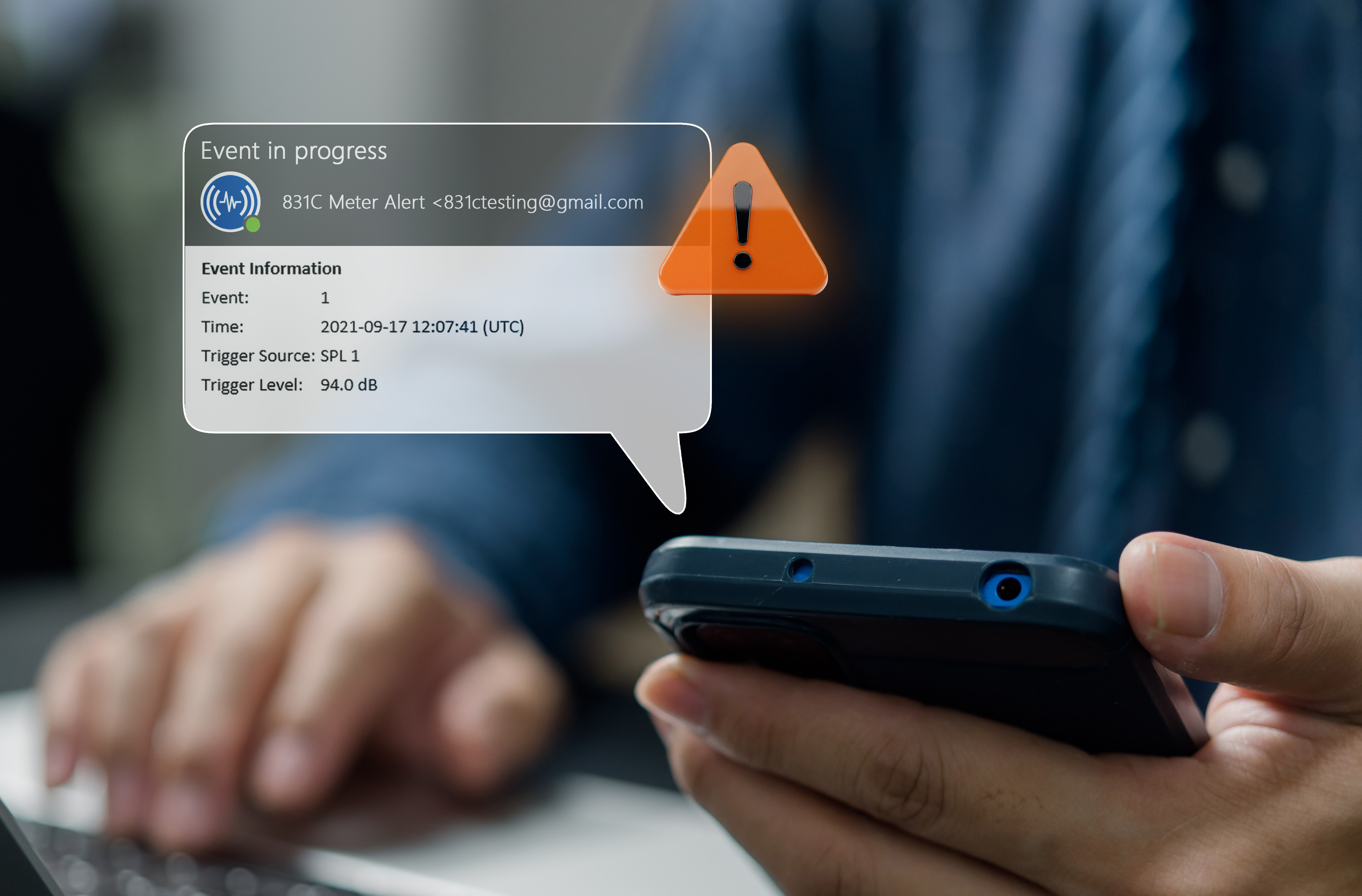
Track noise levels over time to identify changes and assess community noise exposure; respond in real-time with configurable alerts
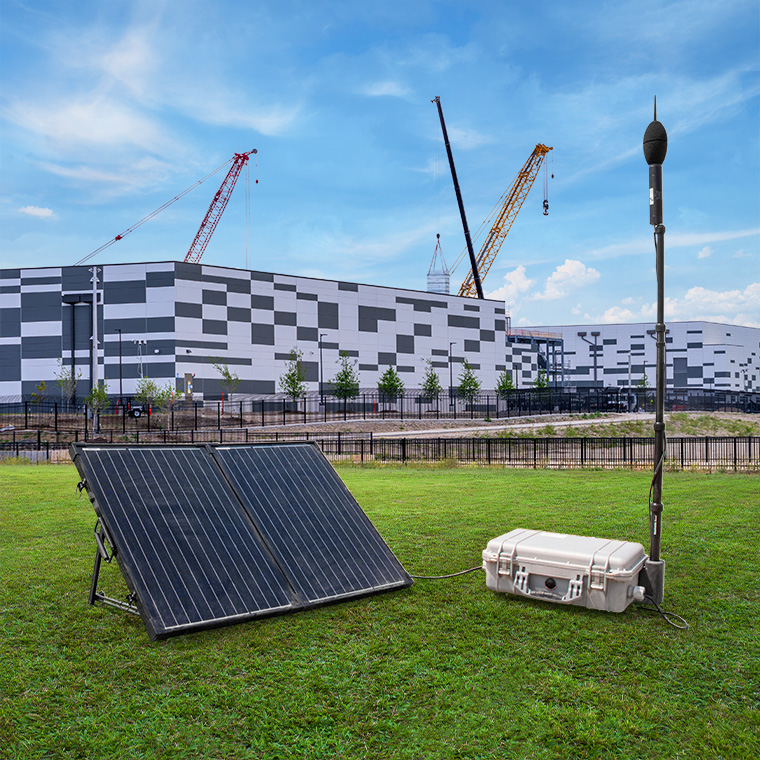
Monitor remote locations with flexible power configurations, including line power, solar panel, and battery options
Customize event triggers using a wide range of acoustic parameters. Use sound recordings and octave band analysis to investigate noise events and guide mitigation
Get expert help configuring your system, plus commissioning, ongoing technical support, and calibration and service from an accredited facility.
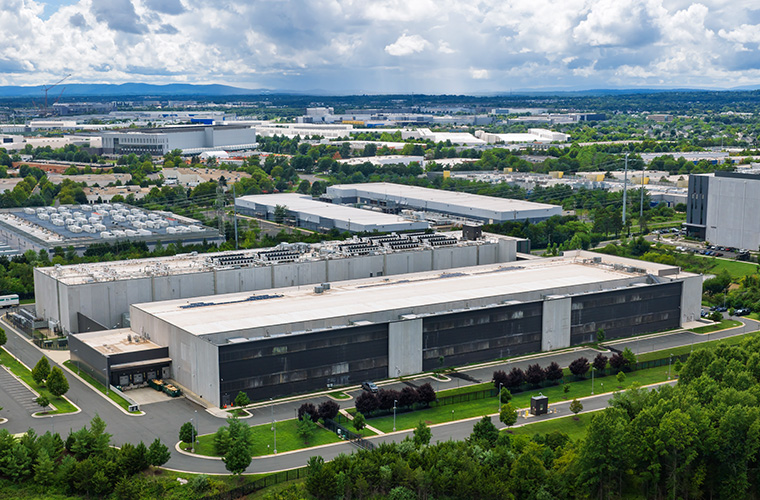
Data center cooling systems, fans, chillers, transformers, and backup generators can produce continuous or intermittent noise that affects nearby communities and attracts regulatory scrutiny. Monitoring helps operators understand noise levels over time, investigate complaints, and evaluate conditions against applicable local noise requirements.
Just as importantly, noise measurements can help characterize the problem before investing in mitigation. Analyzing noise levels, frequency content, and how sound changes with time or operating conditions can help distinguish persistent low-frequency hum from tonal noise, intermittent equipment noise, or other sources. This information helps teams and acoustic consultants determine which mitigation measures are most appropriate, whether that means modifying equipment operation, adding acoustic barriers, improving enclosures, or addressing a specific noise source.
With SoundAdvisor NMS044, operators can collect environmental noise data remotely and receive alerts when configured limits are exceeded, helping them identify potential issues, investigate noise events, and make more informed decisions about noise control.
Yes. The NMS044 provides remote access to the sound level meter over a network connection. You can view measurement data, make supported changes to settings, and receive alerts without being physically present at the monitoring location.
The system can send email or text notifications when configured noise limits are exceeded. Alert settings should be selected to match your monitoring objectives.
Measured acoustic parameters include:
Event triggers can be configured using any combination of:
Yes. SoundAdvisor NMS044 systems configured to include sound recording and octave band analysis help characterize environmental noise and investigate potential sources. Octave band analysis reveals how noise energy is distributed across frequencies, helping identify low-frequency hum, tonal components, and other acoustic characteristics that may contribute to community complaints. Sound recordings provide additional context for investigating noise events and distinguishing potential sources.
Together, these capabilities help data center operators and acoustic consultants better understand noise problems, evaluate potential mitigation strategies, and make informed decisions about equipment modifications, acoustic barriers, or other noise control measures.
The system offers flexible power configurations, including a solar-powered option. Suitability depends on sunlight availability, connectivity, operating conditions, and the selected configuration.
The best configuration depends on your monitoring duration, location, power availability, connectivity, required measurements, and applicable noise criteria. Request a consultation so our team can review your needs and prepare a customized quote.
Noise monitoring can help data center developers and construction teams establish baseline conditions before work begins, monitor construction noise during site development, and evaluate environmental noise as equipment is installed and brought online. Measurements can help identify when noise levels change, document conditions, investigate complaints, and assess whether mitigation measures are effective.
Early monitoring can also help teams understand existing background noise and evaluate how planned cooling systems, generators, and other equipment may affect nearby properties. Larson Davis offers environmental noise monitoring solutions for construction projects and ongoing facility operations, with configurations tailored to project requirements.
Yes. Personal noise dosimeters measure an individual worker's noise exposure over a work shift.
Larson Davis Spartan Noise Dosimeters help safety professionals assess occupational noise exposure during construction, commissioning, equipment maintenance, and ongoing facility operations. The data can help identify workers who may be at risk, support hearing conservation programs, and inform decisions about noise controls and hearing protection.
Contact Larson Davis to discuss environmental and occupational noise monitoring solutions for your data center project.
The portable NMS044 is well suited to monitoring campaigns, investigations, and locations where equipment may need to be moved. For continuous monitoring at a fixed location over the long term, Larson Davis also offers the Permanent Noise Monitoring System Model NMS045. Our team can help you select the best solution for your facility and monitoring objectives.
The SoundAdvisor system uses internet-based time synchronization to keep monitoring records aligned with the correct time, helping you investigate noise events, correlate measurements with site activities, and review when changes in noise levels occurred.
Please visit our article on Data Center Noise Monitoring to learn more.
Get the information you need to monitor environmental noise, investigate potential issues, make informed decisions about your facility, protect the surrounding environment, and build positive relationships with your community.